
The Police Administration Building in Los Angeles was a controversial structure that glamorized modern policing and drew the ire of communities of color for over fifty years.
Later named Parker Center after the sudden passing of Chief William H. Parker in 1966, the building was featured in various TV shows and films such as Dragnet, Perry Mason, and The Closer.
Parker Center, also nicknamed The Glass House, became the nerve center of the 1992 LA Riots following the acquittal of four officers in the beating of Rodney King. The site had already been a source of contention a decade earlier, when communities of color gathered there to protest discriminatory and prejudicial police practices.
On January 13, 2013, the notorious Parker Center was officially closed. For nearly five years, the site where Parker Center stood sat vacant.
In an effort to transform the once-divisive space into something that could unify the community, AHF’s Healthy Housing Foundation proposed to the city that the site be utilized to provide housing for the homeless.

Unfortunately, City Hall moved forward with plans to build a $900 million luxury office tower for city workers instead.
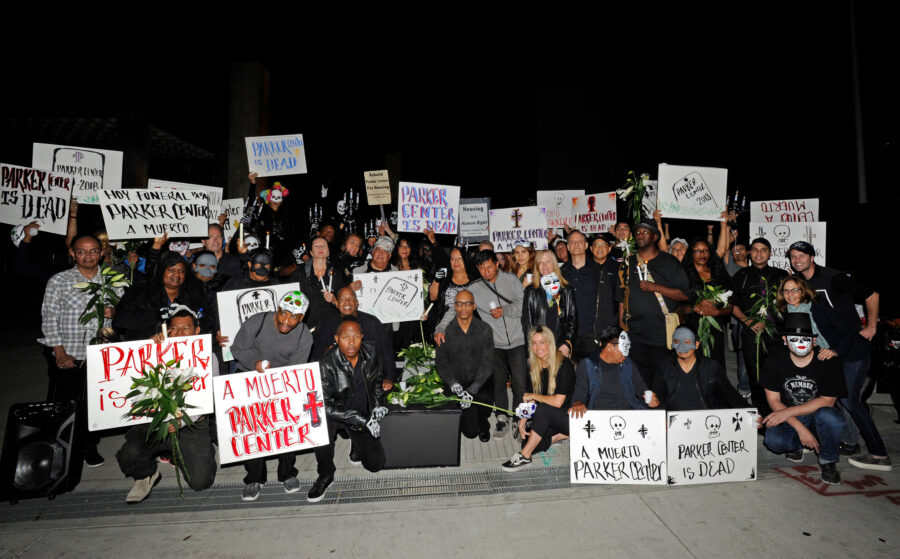
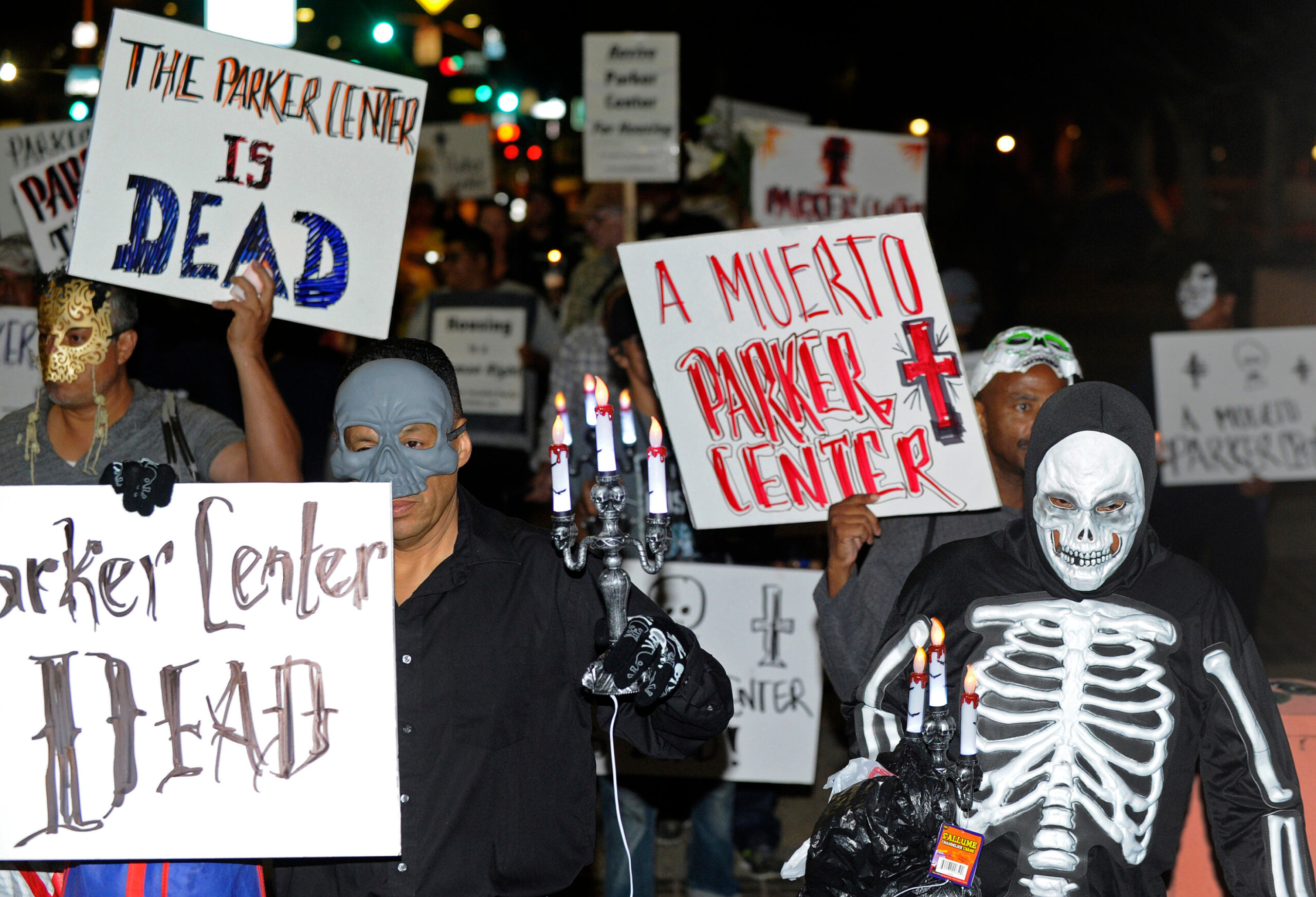
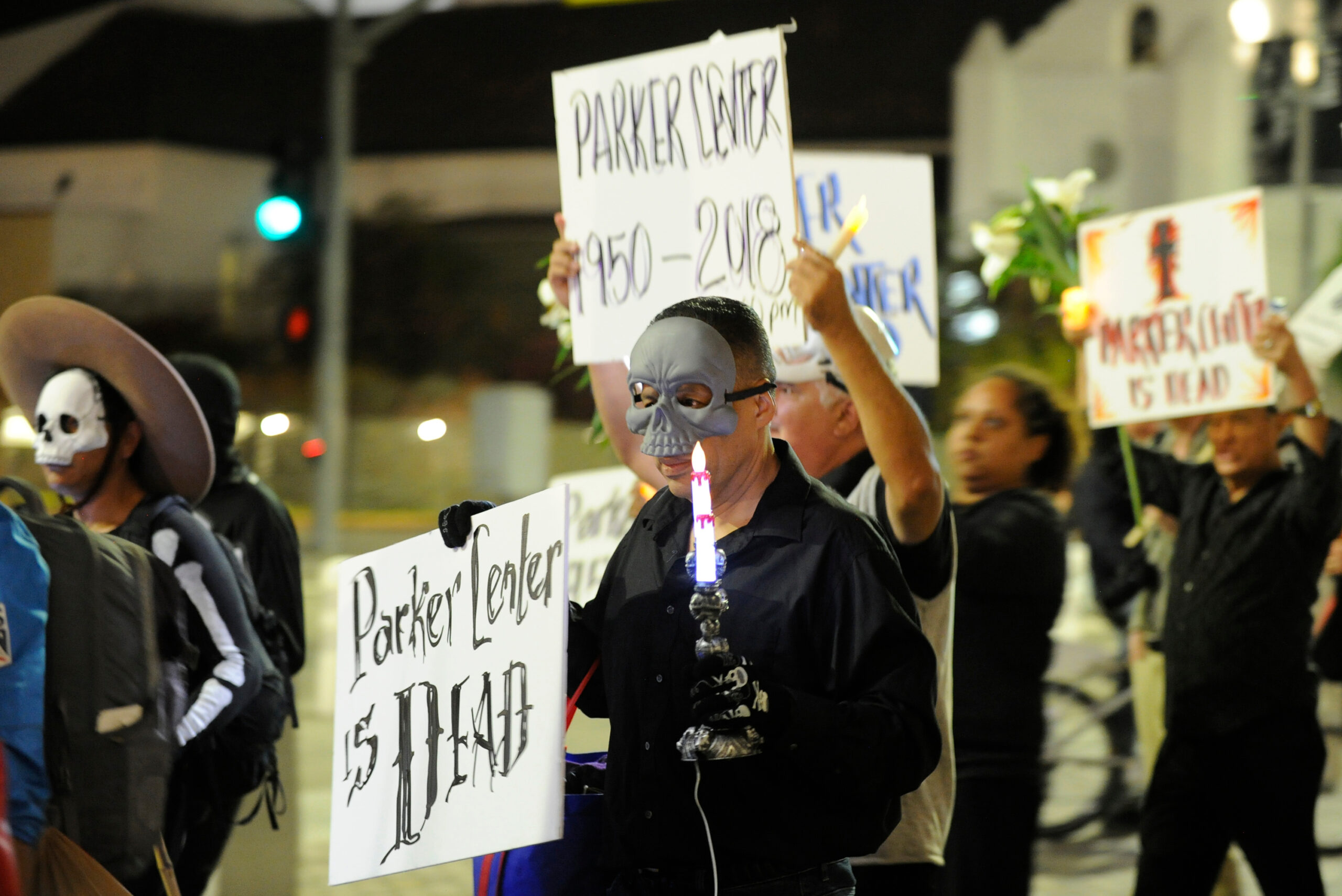
On September 5, 2018, homeless housing advocates—including the Coalition to PreserveLA, the Catholic Worker, and AHF’s Healthy Housing Foundation—gathered to mourn the loss of both Parker Center and the opportunity to create over 700 housing units for the homeless and those at risk of homelessness.
At the time, the city of Los Angeles had a homeless population of over 31,000, while LosAngeles County’s homeless population exceeded 53,000.
Currently, the only thing occupying 150 N. Los Angeles Street is overgrown grass and weeds. Meanwhile, AHF’s Healthy Housing Foundation has gone on to provide housing for thousands of Angelenos.
Have an archival request? Fill out the form here.